
Grace, Partiality & the Righteousness We Cannot Earn
The Gospel According
to the Beaches
What the Sneetches Teach Us About the Sin We Overlook, the Stars We Manufacture, and the Only Righteousness That Matters.
Scroll to begin
Grace, Partiality & the Righteousness We Cannot Earn
What the Sneetches Teach Us About the Sin We Overlook, the Stars We Manufacture, and the Only Righteousness That Matters.
Introduction

Dr. Seuss’s The Sneetches tells the story of creatures divided by the most trivial of markers—a small star on the belly. Those who had it lorded their status over those who did not, excluding them from roasts, games, and gatherings. Those who lacked it spent their days longing to belong, “just sitting there wishing their bellies had stars.” And when a cunning profiteer arrived with machines that could add or remove stars for a price, the community descended into a bankrupting spiral of status-chasing—“off again! on again! in again! out again!”—until, stripped of every pretension and every last cent, they recognized what should have been obvious from the start: “Sneetches are Sneetches,” and no kind of Sneetch is the best on the beaches.
On the surface, this appears to be a simple children’s story about snobbery and tolerance. But for those who have eyes to see, this story holds a mirror to the human heart—and to the church. The beaches of the Sneetches are not so different from our congregations. The stars upon thars are not so different from the marks of distinction we manufacture to feel superior. And Sylvester McMonkey McBean is not the last charlatan to profit from our insecurity.
What follows is an exploration of the Sneetches’ story through the lens of Scripture. We will examine the sin of partiality, the folly of self-righteousness, the gift of imputed righteousness, the call to care for the vulnerable, and the insidious nature of covetousness. The goal is not merely to understand the Sneetches but to understand ourselves—and to behold the glorious grace that alone can set us free.
This is a children’s story, but its lessons cut to the bone of the Christian life. The themes of partiality, self-righteousness, covetousness, and the desperate need for a righteousness not our own run throughout Scripture. What follows is a study of these themes, drawn from the Word of God and the confessional heritage of the Reformed faith, with the Sneetches as an occasional companion.
Part One
The Star-Bellied Sneetches “would brag, ‘We’re the best kind of Sneetches on the beaches.’” They walked past Plain-Bellied Sneetches without speaking, snoots in the air. When the Star-Belly children went out to play ball, “could a Plain-Belly get in the game? Not at all.” They excluded them from frankfurter roasts, picnics, and marshmallow toasts. “They kept them away, never let them come near. That’s how they treated them, year after year.”
This is the sin of partiality in its purest form—judging others by an external marker that has no moral significance and using that marker as a basis for inclusion or exclusion. The star itself was “really quite small,” something one “would think such a thing wouldn’t matter at all.” But they made it matter. They built an entire social order around it.
James’s language is unsparing. To show partiality is not merely poor etiquette; it is a violation of the royal law of love (James 2:8) and makes us “convicted by the law as transgressors” (James 2:9). The gold ring is the star upon thars. The shabby garment is the plain belly. And the church that seats them differently has become a Sneetch beach—sorted by outward markers rather than united by Christ’s blood.
The church faces the same temptation. We manufacture our own stars: theological precision, educational attainment, economic status, ethnic background, worship style, political alignment, family pedigree, denominational affiliation. Then we look at those who lack our stars and render our verdicts.
God Himself is no respecter of persons (Acts 10:34; Romans 2:11). His saving purposes are rooted in His sovereign will, not in anything inherent to the creature. If God does not regard the outward appearance (1 Samuel 16:7), then His people must not either. The sin of partiality is an assault on the character of God Himself, for it imposes human hierarchies upon what God has declared level ground.
But Scripture will not permit this. The apostolic testimony is clear: in Christ, the dividing wall has been broken down. There is no Jew or Greek, slave or free, male or female—and we might add, no Star-Belly or Plain-Belly—for all are one in Christ Jesus (Galatians 3:28). The ground at the foot of the cross is perfectly level. Every star we wear is either a gift of grace or a fabrication of pride, and in either case, it provides no basis for superiority.
Part Two
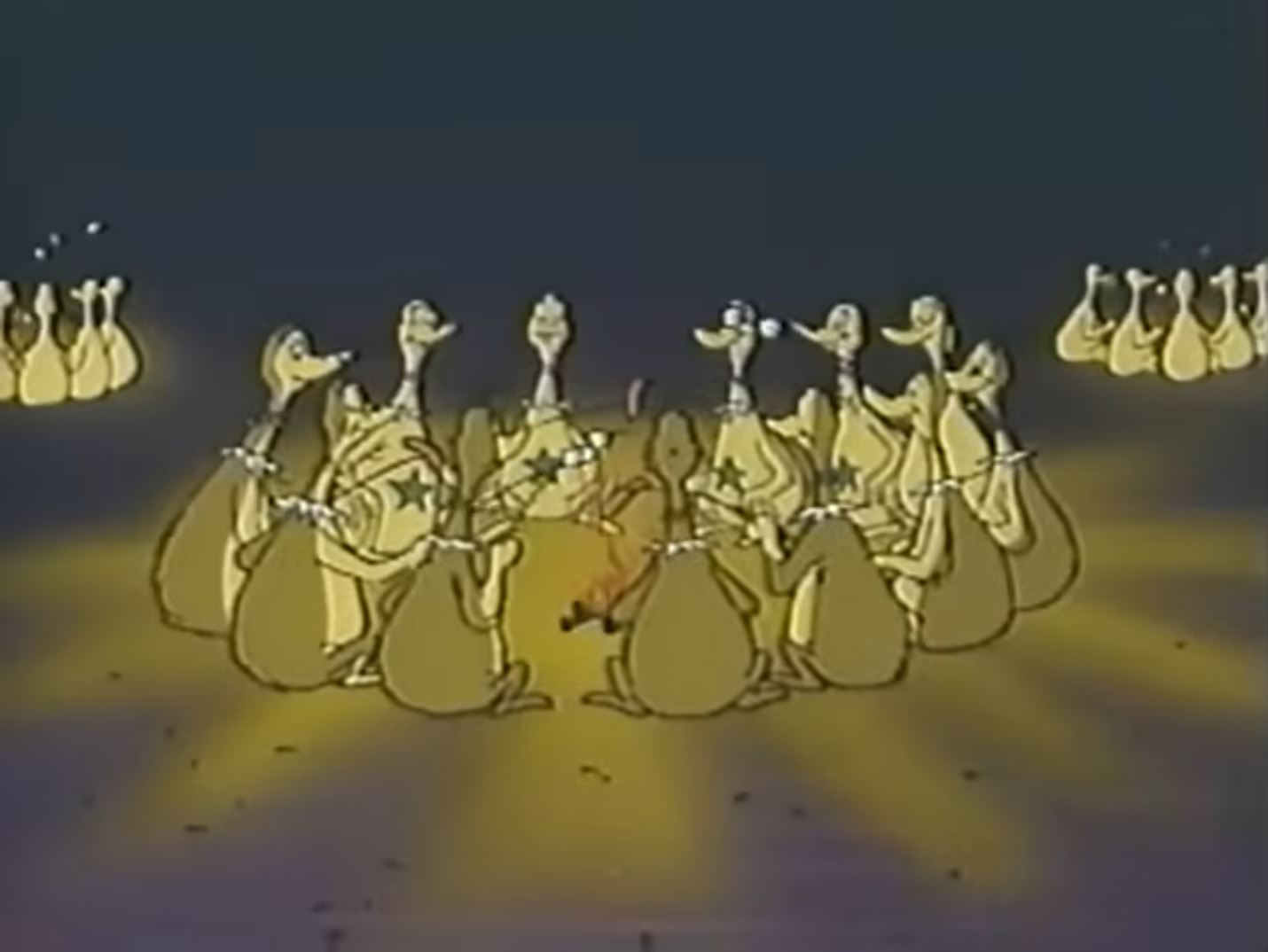
Perhaps the most instructive biblical parallel to the Sneetches’ exclusion occurs not in a children’s book but in a very adult confrontation between two apostles. In Galatians 2:11–14, Paul recounts his confrontation of Peter at Antioch. Peter had been eating with Gentile believers—sharing the frankfurter roast, as it were—until certain men came from James. Then Peter “drew back and separated himself, fearing the circumcision party.” The rest of the Jewish believers followed, and even Barnabas was “led astray by their hypocrisy” (Galatians 2:13).
Paul did not treat this as a matter of preference. He “opposed him to his face, because he stood condemned” (Galatians 2:11). Why? Because Peter’s withdrawal implied that the Gospel of grace was insufficient—that something beyond faith in Christ was required for full standing in the covenant community. Peter had, in effect, reinstalled McBean’s Star-On machine at the church door.
Paul’s diagnosis is penetrating: Peter’s conduct was “not in step with the truth of the Gospel.” The problem was not Peter’s teaching; it was his practice. He hadn’t denied the Gospel with his lips, but he had compromised it with his feet. By withdrawing from table fellowship, he communicated that something more than faith in Christ was necessary for full acceptance. He was, in effect, requiring a star.
This is precisely what the Star-Bellied Sneetches did. They didn’t deny that Plain-Bellied Sneetches existed. They simply wouldn’t eat with them. They wouldn’t let their children play with them. They communicated, through the powerful language of exclusion, that Plain-Bellied Sneetches were not quite Sneetches enough.
Any social arrangement in the church that functionally denies this oneness stands under the same apostolic rebuke that Peter received. That doesn’t mean various distinctive roles are done away with and replaced with one role for everyone in Christ. Rather, our roles no longer separate us, instead they unite us in Christ.
It is possible to affirm the doctrine of justification by faith alone while practicing a fellowship that denies it. When our tables are segregated by ethnicity, by class, by educational background, by theological tribe, we are walking in Peter’s footsteps—however subtly requiring stars that God does not require.
Part Three
No passage unmasks the Star-Belly spirit more precisely than our Lord’s parable in Luke 18:9–14.
“God, I thank you that I am not like other men—extortioners, unjust, adulterers, or even like this tax collector.” His righteousness was comparative, external, and self-generated.
Stood at a distance, beat his breast, and said, “God, be merciful to me, a sinner.” He had nothing to offer but his need.
Christ’s verdict is devastating: the tax collector went home justified, not the Pharisee.
When the Star-Bellied Sneetches prayed, their prayer would have sounded remarkably familiar: “God, I thank You that I am not like other Sneetches—Plain-Bellied, crummy, slummy, gummy. I have a star upon thars. I am the best kind of Sneetch on the beaches.”
The Pharisee’s prayer is the Star-Belly anthem. Self-righteousness always needs an audience and a comparison. The Sneetches’ constant boasting required someone inferior to look down upon. The moment plain-bellied Sneetches acquired stars, the original elite panicked and invented a new standard—stars off. So it is with every form of elitism. Whether the “star” is doctrinal precision, liturgical purity, or cultural separateness, the heart that boasts in it stands in the Pharisee’s sandals.
The Pharisee’s problem was not his fasting or tithing. Those practices were commendable. His problem was his trust—he “trusted in himself that he was righteous and treated others with contempt.” His righteousness was a self-righteousness, a righteousness he believed he had achieved and that made him superior to the tax collector. It was, in other words, a star upon thars.
The one who could list his religious credentials left empty. The one who could only plead for mercy left righteous.
The natural heart is bent toward self-justification. We seek in ourselves what can only be found in Christ. The parallel to those who boast in Reformed pedigree or doctrinal precision while looking down on others is painfully clear. The tax collector went home justified. The Pharisee went home with his stars. Which prayer do we pray?
Part Four

Throughout this exploration, one question has hovered over every page: How do we become right with God? The Sneetches thought the answer was stars. The Pharisee thought the answer was religious performance. Peter, for a moment, seemed to think the answer was circumcision. McBean thought the answer was whatever he could sell.
But the Gospel announces a different answer. The righteousness we need is not a righteousness we achieve, display, or purchase. It is a righteousness we receive. It is the righteousness of Christ, credited to all who believe.
The phrase “there is no distinction” is devastating to every Star-Belly claim. Before the cross, all bellies are plain. No external mark, no amount of moral effort, no cultural conformity can produce the righteousness God requires.
This is imputation—Christ’s record becomes ours by faith alone. Our own righteousness—our stars, our achievements, our religious performances—are as filthy rags. Christ, the sinless One, took our sin upon Himself. And in exchange, He gives us His righteousness. This is the great exchange, the heart of the Gospel.
This righteousness is not a star upon thars. It is not an external marker we can point to with pride. It is not something that makes us superior to others. It is a gift, received by faith, that levels every ground of boasting.
Because our standing before God rests entirely on Christ’s perfect obedience and atoning death, boasting is excluded (Romans 3:27). The Sneetches spent every cent trying to fix themselves up. The Gospel announces that the true Fix-It-Up Chappie has already come—not to exploit our insecurity, but to clothe us in a righteousness that can never be removed (Isaiah 61:10; Philippians 3:9).
The Sneetches, in their way, learned something similar. When they finally stopped caring about stars, they discovered what they had always been: Sneetches. They didn’t become something else. They didn’t achieve a higher state of Sneetch-ness. They simply recognized their common identity and celebrated together.
Part Five
What drove the Sneetches into McBean’s machines? The Plain-Bellied coveted the stars of the Star-Bellied. The Star-Bellied coveted the distinction of being without stars once everyone else had them. Both groups were consumed by desire for what the other possessed or lacked. This is covetousness—the tenth commandment violation that Scripture identifies as the root of endless misery.
Sylvester McMonkey McBean arrives in “the strangest of cars,” offering to fix the Plain-Bellied Sneetches’ problem for a price. For three dollars each, he will give them stars. For ten dollars each, he will take stars away. He works both sides of the conflict, exploiting pride and insecurity with equal skill. When every last cent is spent, he packs up and drives off, laughing: “They never will learn. No, you can’t teach a Sneetch!”

McBean is a merchant of discontent. He doesn’t create the stars; he creates the market for them. He understands that human beings will pay almost anything to feel superior—or to escape the pain of feeling inferior. He knows that if he can make the Sneetches want what they don’t have, and fear losing what they do have, he can empty their pockets.
Paul identifies covetousness as idolatry (Colossians 3:5). The love of money is a root of all kinds of evils. It leads some to wander from the faith and pierce themselves with many pangs. It makes merchandise of human souls.
Covetousness always promises satisfaction tomorrow at today’s price. The Sneetches ran through the machines “off again! on again! in again! out again!” until every last cent was spent. Their exhaustion mirrors the warning in Ecclesiastes: “All is vanity” (1:14). The pursuit of status through consumption, whether literal money or emotional currency, is an endless treadmill.
The antidote to covetousness is not more stars but the settled assurance that God Himself is our portion. The Sneetches finally learned this—or at least began to learn it. When their money was gone and their identities confused, they realized that stars were not the point. “That day they decided that Sneetches are Sneetches, and no kind of Sneetch is the best on the beaches.”
Part Six

One detail in the Sneetches’ story is easy to overlook: the Plain-Bellied Sneetches were not merely excluded from the inner circle; they were left “out cold, in the dark of the beaches.” They were alone, moping, wishing they had stars. The Star-Bellied Sneetches, for all their boasting, never thought to invite them in. They never shared their marshmallows. They never asked the lonely Sneetches to play ball.
This is not merely a failure of hospitality; it is a failure of compassion. And Scripture has much to say about such failures.
The pattern of God throughout the Old Testament is a pattern of concern for the vulnerable—the poor, the widow, the orphan, the sojourner. The law is filled with provisions for their care: corners of fields left unharvested, wages paid promptly, justice administered impartially. The prophets thunder against those who trample the heads of the poor into the dust of the earth.
In our world, the poor, the widow, the orphan, and the stranger are the ones most easily excluded. In the church, the “star” of social standing, wealth, or pedigree must never determine hospitality or compassion. When believers show favoritism to the influential while neglecting the widow, the orphan, or the stranger, they deny the Gospel that welcomed them when they had nothing to offer. Grace received must become grace extended.
It is possible to have excellent doctrine and a closed table. It is possible to affirm the doctrines of grace while showing no grace to the lonely, the marginalized, the different. But this is a contradiction at the heart of our profession. If we have been welcomed at God’s table as beggars, how can we refuse to welcome other beggars?
The doctrines of sovereign grace are not an excuse for passivity but the engine of radical generosity. Because we have received what we did not earn, we extend to others what they cannot repay (Luke 14:12–14). The church is not a club for Star-Bellied Sneetches but a hospital for sinners, a home for the homeless, and a family for the fatherless.
Part Seven
The story ends with the Sneetches deciding that “Sneetches are Sneetches” and celebrating together. No longer did stars matter. This resolution foreshadows the church as Scripture describes it. The dividing walls erected by pride, race, class, or culture are demolished at the cross (Ephesians 2:13–14).
The church is not a collection of star-bearers and plain-bellied strivers; it is a company of sinners saved by grace alone. Its unity is not manufactured by erasing differences but by anchoring identity in the same Savior. When believers gather around the Lord’s Table, no one checks credentials. The same body and blood nourish every member.
These doctrines can themselves become stars. We can wear our Calvinism like a badge of honor, sniffing and snorting at those who don’t share our distinctives. We can become Star-Bellied Sneetches of the theological variety, excluding from our tables those who don’t measure up to our standards. This is the perennial temptation, and we must resist it with all our might.
The antidote is the Gospel itself. When we truly grasp that we are saved by grace alone, we cannot boast. When we truly understand that our righteousness is imputed, not achieved, we cannot look down on others. When we truly see ourselves as tax collectors, pleading for mercy, we cannot play the Pharisee. Nor can we be like Jonah who received grace and knew the lovingkindness of God—he wore it like a badge—but did not want those very things shared with people he despised.
We are not called to manufacture new and better stars. We are not called to cycle through machines of worldly self-improvement. We are called to receive the righteousness of Christ and to extend the same grace to others that we have received. We are called to be a community where boasting is excluded, where mercy triumphs over judgment, and where the only star that matters is the Star of Bethlehem, the Light of the World.
Conclusion

McBean drove off laughing, convinced the Sneetches would never learn. But “the Sneetches got really quite smart on that day.” The story ends with hope. “That day they decided that Sneetches are Sneetches, and no kind of Sneetch is the best on the beaches. That day, all the Sneetches forgot about stars and whether they had one or not upon thars.”
This is the repentance to which the Gospel calls us. We must forget about our stars—whether we have them or not, whether we once had them and lost them, whether we have always been plain. We must stop defining ourselves and others by the markers we have manufactured. We must find our identity in Christ alone.
For young believers in Reformed congregations, the lesson is this: your heritage is not a star. Your doctrinal precision is not a star. Your attendance in Biblical Worldview class every other Monday doesn’t earn you a star. Your theological library, your denominational affiliation, your family’s churchgoing record—none of these earn you standing before God or entitle you to look down on anyone. The only righteousness that matters is the one you did not produce, cannot lose, and dare not boast in—the righteousness of Jesus Christ, imputed to all whom God saves.
The goal is not to remove the stars or to add them but to stop counting them altogether. The goal is the beach after McBean leaves: a community where every last cent of self-reliance has been spent, where the machines of human merit have broken down, and where Sneetches celebrate together—not because they earned the right, but because grace has made them one.
The beaches are waiting. The frankfurter roasts are ready. The children are gathering to play ball. And the only question that matters is this: Will we check bellies at the door, or will we celebrate together, knowing that Sneetches are Sneetches—and that we are all, by grace, the beloved children of God?
May we learn what the Sneetches learned. May we forget about stars. And may we feast together at the table of the One who had no star, no earthly beauty that we should desire Him, but who loved us and gave Himself for us.
Therefore, let the church be known as the place where stars no longer matter. Let partiality die, self-righteousness be crucified, covetousness be mortified, and the vulnerable be welcomed. Let every gathering echo the final beach: all celebrating together because all have been received by the same grace. Sneetches are Sneetches—God’s call to repentance is to everyone. To Him alone be the glory.